Self-inflating camping mats combine convenience with comfort, making it easier to sleep soundly under the stars. This guide reviews five top options that balance thickness, support, and ease of use. Each product features built-in pillows or quick inflation mechanisms to cut setup time and improve sleep quality on uneven ground. Read on to compare designs, materials, and inflation tech to find the right mat for camping, backpacking, or car camping.
| Product | Thickness | Inflation Type | Weight |
|---|---|---|---|
| Camping Sleeping Pad, Ultralight Camping Mat | 3 inches / 8 cm | Built-in foot pump | Lightweight (approx. water-bottle size) |
| OGERY Self Inflating Sleeping Pad | 3.15 inches / 8 cm | Built-in intelligent air pump (electric) | Moderate |
| Sleeping Pad, Ultralight Inflatable | Unknown (thick and supportive) | Built-in foot pump | Lightweight |
| Elegear CumbreX Self Inflating Pad | 3.15 inches / 8 cm | Fast self-inflation via foam pressure | Moderate to heavy |
| NYZ Self Inflating Sleeping Pad | 3.1 inches / 7.9 cm | Dual-use valve for quick inflation/deflation | Heavier |
Camping Sleeping Pad With Built-In Pillow And Pump
Some links in this article are affiliate links. If you buy through them, this site may earn a commission at no extra cost to you.
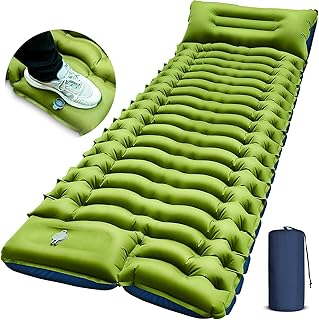
The FUN PAC Store Camping Sleeping Pad is up to 78 by 27 inches with a 3-inch thickness. Egg-shaped air cells and an integrated pillow help align the spine and neck, enhancing comfort whether you sleep on your back or side. The built-in pump inflates fully in 30–60 seconds, and the valve design minimizes air leaks. Its ultra-light profile makes it a practical choice for hikers seeking compact setup and reliable warmth on uneven ground.
OGERY Self Inflating Sleeping Pad With Electric Pump
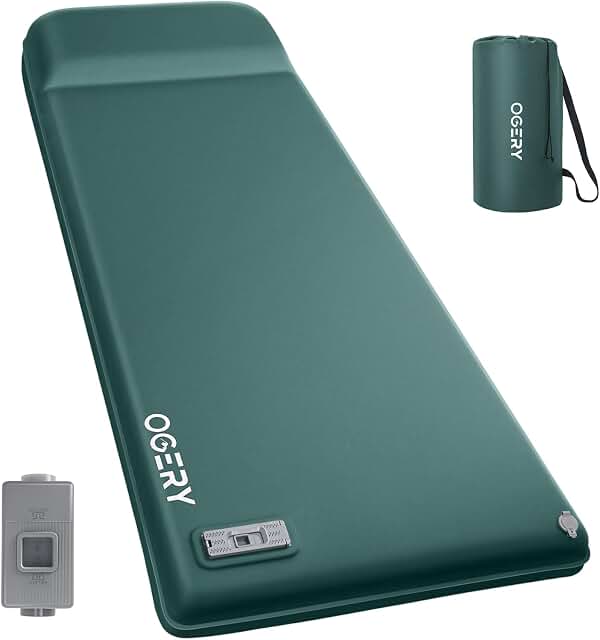
The OGERY pad uses a rechargeable, detachable intelligent air pump to inflate in about 40 seconds and deflate in 90 seconds. It runs on a 7.4V battery and includes a USB-C charging option. The 3.15-inch thick memory foam surface is wrapped in a breathable, quiet fabric, delivering durable, all-season comfort. The design emphasizes quick setup and consistent firmness, with a test-leading load capacity and robust fabric for outdoor durability.
Ultralight Inflatable Sleeping Pad With Built-In Pillow

This pad features wave-shaped air chambers that adapt to irregular ground for night-long support. A built-in pillow reduces joint strain in the back and neck. Setup is quick, with an integrated foot pump achieving full inflation in about 50 seconds and deflation in roughly 1 second. Weighing around 1.5 pounds, it folds to a compact size, making it ideal for backpackers and travelers seeking rapid deployment without bulk.
Elegear CumbreX Self Inflating Sleeping Pad

Elegear introduces a 3.15-inch ultra-thick memory foam pad with Hi-Tech 26D foam for distributed support and reduced pressure points. The 77 by 27 by 3.15-inch dimensions provide a wide sleeping surface, and the foam is designed to resist compression over time. The product touts fast self-inflation when opening both valves, though first use may require additional time due to packaging. It’s built for extended use in various seasons with high load tolerance.
NYZ Self Inflating Sleeping Pad With Pillow

NYZ offers a 3.1-inch thick memory foam mat designed for four-season use. The pad uses a 26D foam and includes an integrated pillow top for head support. It inflates quickly via a dual-use valve, enabling faster deflation for compact packing. The pad supports substantial weight and durability, though its heavier build may affect backpacking practicality. It’s well-suited for car camping and family trips where comfort is prioritized over ultra-light weight.
Buying Guide
Key considerations when choosing a self-inflating camping mat include thickness, insulation, and weight. Thicker mats generally offer more comfort on rocky terrain but may increase weight and bulk. Look for high-density memory foam or specifically engineered foam (like 26D) for consistent support and long-term resilience. Inflation technology matters: built-in pumps save setup time, while electric pumps offer the fastest inflation but require power sources and charging considerations.
Material durability and fabric quality affect longevity and noise during sleep. Breathable, quiet fabrics reduce rustling and improve comfort for side sleepers. For backcountry trips, packability—how small the mat folds and how much space it occupies—can be a decisive factor. Assess compatibility with your sleeping pattern (back, side, stomach) and whether you need a built-in pillow for neck support or a standalone pillow solution.
Cold weather performance relies on insulation value and surface warmth. Mats with thicker foam provide better insulation from cold ground, but ensure the outer shell resists tears and punctures. If you frequently camp in damp or rainy conditions, check the mat’s water resistance and edge stability to prevent shifting during the night.
Budget and availability are practical considerations. Some mats emphasize ultralight design suitable for hikers, while others emphasize maximum comfort for car campers. Review warranty details and care instructions to maintain foam resilience and structural integrity after repeated folding and storage.